
What Local Business Owners Need to Know About AI Search Right Now
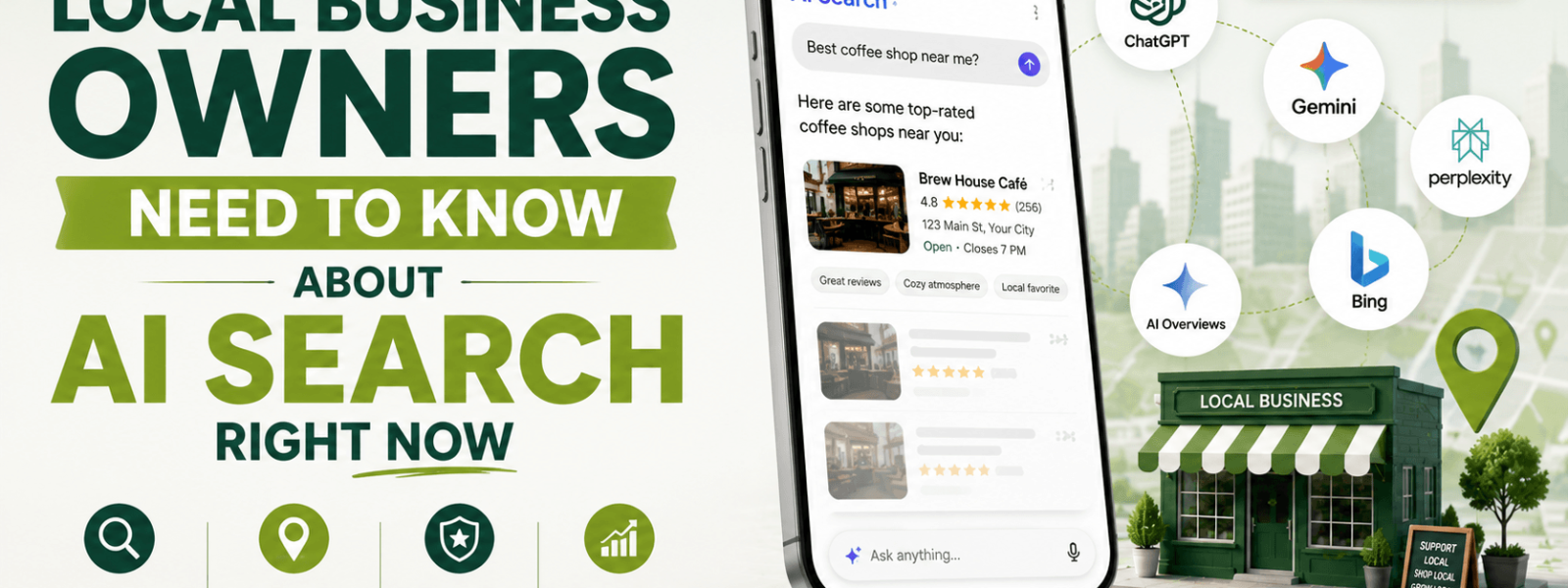
Someone searching for “a plumber near me open right now” used to get a list of blue links. Now they might get a direct answer, generated by an AI system pulling from several sources at once, with no guarantee that any particular business owner even knows their information was part of that answer. That shift is quiet, but it changes what “being found online” actually requires.
AI Search Works Differently Than Traditional Search
Tools like Google AI Overviews, ChatGPT Search, and Bing Copilot don’t just crawl a webpage and rank it. They synthesize information from multiple sources to produce a single answer. That means a business’s information needs to be not just present, but consistent and clearly structured across the places these tools pull from — its website, its Google Business Profile, and relevant directories. A single well-optimized page matters less than it used to; a coherent set of accurate mentions matters more.
Structure and Clarity Help These Systems Understand a Business
Clear, specific language helps both human readers and AI systems. A page that says “we install and repair residential water heaters in the greater Austin area” gives an AI tool something concrete to work with, compared to vague language about “quality service you can trust.” The same logic applies to directory listings. A detailed, accurate business description with a clear category and service area is easier for an AI system to summarize correctly.
Directories Are Part of the Data These Systems Read
AI search tools often pull from a mix of sources, not a single authoritative one. A directory listing on a site like city360biz.com adds another accurate data point to that mix. It doesn’t guarantee inclusion in any particular AI-generated answer, but it does reduce the chance that outdated or conflicting information ends up being the version an AI tool decides to use.
Nobody can fully control what an AI search tool says about a business. What business owners can control is the accuracy and consistency of the information available for those tools to draw from. That’s a more realistic goal than chasing a specific placement, and it’s one that pays off across every kind of search, not just the AI-driven kind.
Frequently Asked Questions
AEO, or Answer Engine Optimization, focuses on how AI tools summarize and answer questions directly, rather than just how a page ranks in a traditional search results list. It overlaps heavily with good SEO practices but places extra weight on clarity, structure, and consistency across sources.
Not directly or with certainty, but accurate, consistent information across a business's website, profile, and directory listings makes it more likely that any AI-generated summary reflects reality. It's less about control and more about giving these systems reliable material to draw from.
Not entirely different, but voice search tends to favor natural, conversational phrasing and direct answers to specific questions. Writing content that answers real questions plainly, the way a person would ask them out loud, tends to serve both voice search and AI-driven search well.
Focus on clarity and specificity rather than a separate strategy. Vague, promotional language is harder for AI tools to summarize accurately than clear, factual descriptions of what you do and where you do it. Good, honest writing tends to serve both human readers and AI systems.
They add another consistent, accurate source of information for AI tools to reference. While no single directory listing guarantees visibility in an AI-generated answer, accurate listings reduce the odds of conflicting or outdated details influencing what an AI tool ultimately presents to a searcher.
